
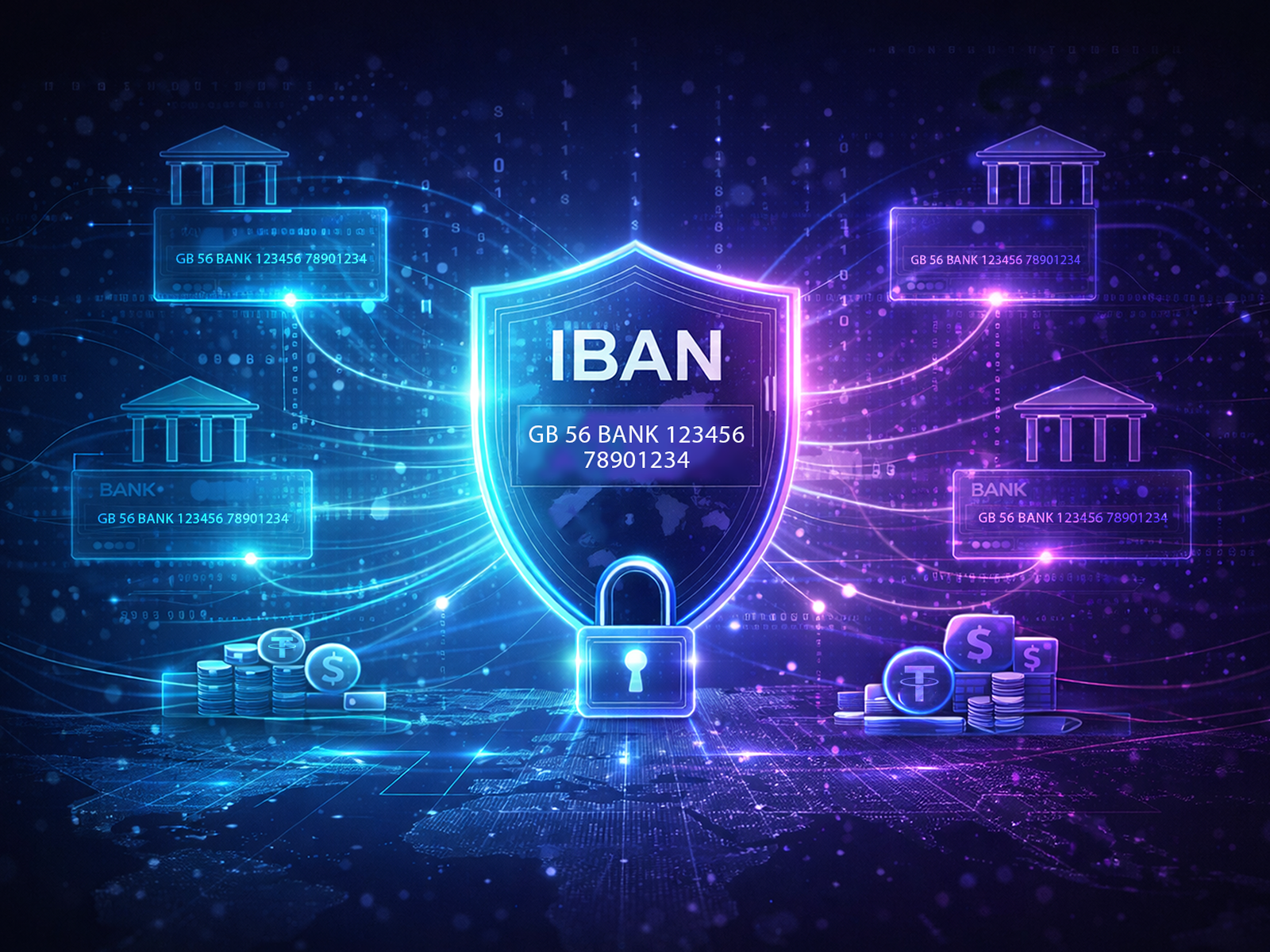
What are virtual IBANs and what are they used for?
Most people are familiar with IBANs: those long, 14 to 34-digit account numbers used for international bank transfers. Today however, a growing number of businesses and individuals are turning to virtual IBANs (sometimes called 'named' IBANs) to reduce fees and cut out unnecessary friction. At first glance, they look and function much like regular IBANs, but behind the scenes, they work quite differently.
Where a traditional IBAN is tied 1:1 with a single, physical bank account, a virtual IBAN is not. Instead, it's more akin to a personalised payment route: a 'sub-account' of sorts that connects back to one central account. A business might generate different virtual IBANs to separate payment flows, for example by currency, by client, or by type of transaction.
It's not just businesses who benefit – individuals are increasingly using virtual IBANs to simplify their personal finances, whether to receive payments in multiple currencies, off-ramp digital assets, or streamline freelance income without needing to open bank accounts in different countries.
Below, we'll break down how virtual IBANs work, how they compare to traditional banking infrastructure, and why they've become a powerful tool for crypto platforms, global businesses, and anyone moving money across borders.
What Are The Benefits of Virtual IBANs?
In a traditional setup, an IBAN is an address for a single bank account. If you need to ringfence funds for different uses, e.g. separating currencies or income streams, you'd typically have to open and maintain multiple bank accounts. Not only is this expensive and time-consuming, it also creates more complexity on the back end with more compliance checks and more admin. Virtual IBANs remove that overhead.
There are three key advantages here, namely:
1. Multi-currency payments become faster and cheaper
International bank transfers typically mean expensive SWIFT fees, slow settlement times, and hidden intermediary fees. Virtual IBANs on the other hand allow businesses to receive local payments in major fiat currencies like EUR, GBP, or USD, without having a physical bank account in those regions. This makes international payments cheaper, faster and more reliable, hugely improving the end-user experience for cross-border clients.
2. Flexibility to scale without friction
With virtual IBANs, there's no need to open new bank accounts every time your operations expand. If you're entering a new market or managing a new revenue stream, you can request a dedicated virtual IBAN in the relevant currency or region, all while keeping funds consolidated in one central account. This makes it easier to scale without adding banking overhead, especially for businesses dealing with multiple currencies or jurisdictions.
3. Payment flows stay clean and easy to follow
Every virtual IBAN is unique, which means incoming payments are automatically tagged and organised without the need for manual reconciliation. It also adds a layer of transparency that's particularly valuable in industries like crypto and financial services, where traceability matters.
Use cases: Who can use a Virtual IBAN?
Virtual IBANs are used every day by businesses, individuals, consultants and more to simplify how money moves. If you're sending or receiving payments across currencies, managing high transaction volumes, or just trying to streamline finances, virtual IBANs can help.
You don't need to be a global enterprise to benefit. A solo consultant working with overseas clients, a company running stablecoin payroll, or a real estate developer accepting international deposits – all can use virtual IBANs to get paid faster and reduce operational headaches.
Uses cases are incredibly versatile, but some of the most practical and common include:
- Stablecoin payrolls
- On and off ramping cryptocurrency to and from fiat currency
- Corporate treasury management
- Real estate transactions
- Affiliate and partner payouts
- Global remittance
- Supply chain and vendor management
- Paying for luxury experiences and goods in stablecoins
How SettlementX handles virtual IBANs
At SettlementX, virtual IBANs are generated and managed within your account to help streamline how you receive, attribute, and off-ramp funds. Each virtual IBAN links back to your central account, keeping settlement unified and flexible. Through the dashboard, you can request new IBANs by currency, region, or transaction type, helping you organise incoming payments and better track flows.
For example, if you're paying a remote global team in stablecoins, you can provide each recipient with a secure off-ramp link to SettlementX, where they can access a dedicated virtual IBAN to off-ramp into USD, EUR, AED or GBP – without needing their own crypto wallet or exchange account. Similarly, if you're based in the UK and settling a property transaction in the UAE, you can fund your SettlementX account in pounds or stablecoins, convert to dirhams, and have the payment delivered to the developer or agent as a standard domestic transfer – all without opening a local bank account or relying on traditional remittance routes.
Read more: 6 Powerful Use Cases for Virtual IBANs
Final thoughts
In a financial system that grows more complex every day, virtual IBANs help bring logic, transparency, and speed to what is historically a fragmented process. To see how it works in practice, reach out today.